Gross Motor Skills
Motor skills are the different ways the body uses muscles to perform different tasks. These are generally split into two groups. Gross motor skills are movements made using the larger muscles of the body and include sitting, walking, jumping etc. Fine motor skills are the movements made with the smaller muscles to control movements in the hands and fingers. These enable objects to be picked up and to complete tasks such as building towers, holding a pencil and opening a bottle.
Gross Motor Skills
One of the aspects of a child’s gross motor skills that we look at within Occupational Therapy are the development of their core muscles. It is these muscles that allow the child to sit unaided. Without these skills it can be difficult for children to engage in daily activities such as eating a meal, getting dressed and playing.
Core Strength
Core strength is the ability to maintain the position of the trunk, it is important for stability and controlling the pelvis and spine to allow controlled movement of the arms and hands.
To enable a child to be able to sit in a chair, they need to have a degree of core strength to allow them to engage their core muscles to ensure that they are able to maintain a stable posture.
Good posture
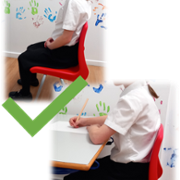
- Feet flat on the floor
- Seat supporting to back of the knee
- Back supported by the back rest of chair
- Elbows resting on the table
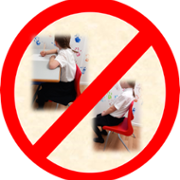 A child that does not have good core strength will often slump and slide down the chair, they can often compensate by sitting sideways on the chair with their arm hooked over the back to provide them with additional support or they may also use the table to support them.
To support a child to sit comfortably at the table, ensure the child has their feet supported by either providing a chair low enough for their feet to sit flat on the floor or by providing a step to allow them to support their feet.
Also consider the desk height when choosing a suitable chair, ensuring that the child’s elbows rest comfortably on the table, without raising their shoulders. If you have a child that you feel may have poor core strength, you can develop this through the activities below.
Upper Limb Strength
Before children are able to have full control over the movements of their hands, they need to be able to control their arms and shoulders. Developmentally, children will often begin mark making using movements from their shoulders and elbows. Upper limb strength should develop naturally during the nursery and reception stages.
When children use their shoulders and elbows to write you will often find that the writing will be large and often children can find it more difficult to keep their writing on the line. As the child develops, they are able to stabilise the shoulder and elbow and they begin to write using the finer movement of the hand and wrist. Using the finer movements of the hand can enable the child to have more control over the pencil, making it easier to write.
To support children to develop their upper limb strength you can use our upper limb activity ideas.