Getting Started
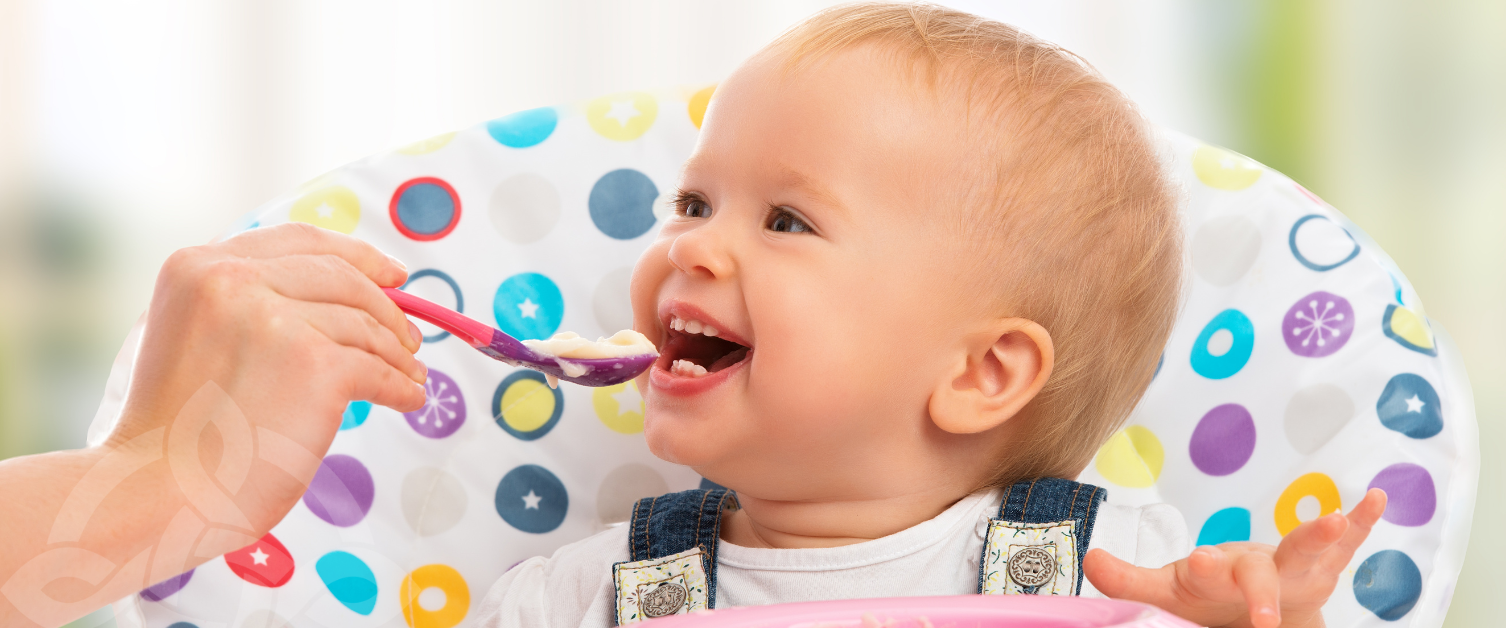
Starting on solid food is a very exciting time for you and your baby. There is a wide variety of different colours and textures of food available for them to try. Offering finger foods (like soft cooked vegetable sticks) can be a fun way to introduce solid food.
Be patient it can take several attempts (up to 20 times for some) for your baby to accept new foods, particularly as they get older. They may make funny faces, but this does not mean they do not like it, they are just getting used to new flavours and textures.
Watch Introducing Solids - Foods and Textures - YouTube - video clip produced by the Cardiff and Vale Nutrition and Dietetic Department.
Around 6 months
The aim of first foods is to help babies explore new tastes and textures. Every baby will be different. Many babies will be able to manage a range of pureed and mashed foods as well as being able to hold soft finger foods themselves. Some babies may need a little longer to get used to new textures and prefer pureed foods on a spoon to start with.
Babies’ first foods can include a variety of foods from the different food groups. Expressed breastmilk, first infant formula and/or full fat cow's milk can be mixed with first foods to achieve the desired consistency. It is useful to offer not-so-sweet vegetable flavours such as broccoli, cauliflower, green beans, mushrooms and spinach as evidence suggests this might help babies be more accepting of vegetables later on. There are some foods which you should avoid giving your baby, for more information: Foods to avoid giving babies and young children - NHS
- Offer mostly simple and minimally processed foods
- Let baby get involved in the eating experience
- Avoid or limit the use of shop-bought foods aimed at babies and toddlers. These often do not contain the right balance of nutrients babies need for healthy growth
- Avoid giving your baby processed foods like crisps, chocolate, ice cream and sweets.
At around 6 months, babies can be encouraged to drink from a cup. Breastmilk (or first infant formula) and water are the only drinks babies need.
Around 7-9 months
By this age, your baby can build up to having three meals a day (alongside their usual breastmilk feeds or infant formula milk). You can offer mashed foods and soft lumps. Providing finger foods as part of each meal will encourage babies to feed themselves and develop chewing skills, independence and co-ordination. As your baby becomes used to taking solids, a wide variety of the four main food groups can be offered. For more information on the different food groups:
Around 10-12 months
By this age, your baby should be able to manage a range of minced and chopped foods, and be offered three meals a day, alongside their usual breastmilk or infant formula feeds.
Just remember that every baby is different, each one will progress through the above stages in their own time. Progressing through the stages should be based on your own baby’s readiness, not exactly their age.
General tips
General tips
- Avoid adding salt, sugar or artificial sweeteners to any baby’s food
- Honey is unsuitable for babies under 1 year of age as it contains a bacteria that can cause botulism (a form of food poisoning).
- Offer food when babies are most likely to be hungry
- Offer colourful fruits and vegetables that will catch their attention.
- Give foods they have eaten before alongside anything that is new.
- Eat together, this makes mealtimes more enjoyable and sociable.
- Allow babies to try feeding themselves, they may well eat more if they have more control.
- Try to keep calm, If parents are anxious and tense, babies will often pick up on this.
- Try not to worry if more food is eaten on some days than on others, be guided by your baby and their appetite as they are growing and developing in the first year.
- Unfamiliar foods need to be offered repeatedly (8-10 times) to encourage baby to taste and accept new flavours.
- It is recommended that from birth to one year of age, exclusively or partially breastfed babies should be given a daily supplement containing 8.5 micrograms to 10 micrograms of vitamin D. Formula-fed babies do not need a vitamin D supplement unless they are receiving less than 500ml (about a pint) of formula a day.
Introducing Foods that could trigger an Allergy
When your baby reaches around 6 months of age and begins trying solid foods, it is recommended to introduce potential allergenic foods gradually. Offer them one at a time and in very small amounts so you can easily notice any signs of a reaction.
If your baby already has a known allergy such as a diagnosed food allergy or eczema, or if there is a family history of allergies, eczema, asthma, or hay fever, you may need to take extra care when starting solids. Your GP or health visitor can provide personalised advice and support.
Foods that may cause allergic reactions include:
- Cow’s milk
- Eggs (avoid giving raw or lightly cooked eggs unless they have the red lion stamp)
- Gluten-containing foods such as wheat, barley, and rye
- Nuts and peanuts (only offer them finely ground or as smooth nut butters)
- Beans, lentils, and peas
- Seeds, especially sesame (serve finely ground)
- Soya
- Shellfish (never serve raw or lightly cooked)
- Fish
- Celery
- Mustard
- Sulphur dioxide (sometimes present in dried fruit and fruit juices)
These foods can be introduced from around 6 months as part of your baby’s normal diet. If your baby tolerates them well, it’s helpful to keep offering them regularly to reduce the likelihood of developing an allergy. Research suggests that waiting beyond 6 to 12 months to introduce peanuts or hen’s eggs may actually increase the chance of an allergy developing.
Many children eventually outgrow allergies to foods like milk or eggs, although some allergies can persist long-term. If your child has a diagnosed food allergy, always check ingredient labels carefully and avoid any foods that might contain the allergen. For more information, please visit: Food allergies in babies and young children - NHS
Useful information and resources
- Your baby's first solid foods - NHS (www.nhs.uk).
- A guide to introducing solids and eating well up to baby's first birthday - Eating well in the first year — First Steps Nutrition Trust.
- Parent information resources - Parent Information Resources | Every Child (everychildwales.co.uk).